
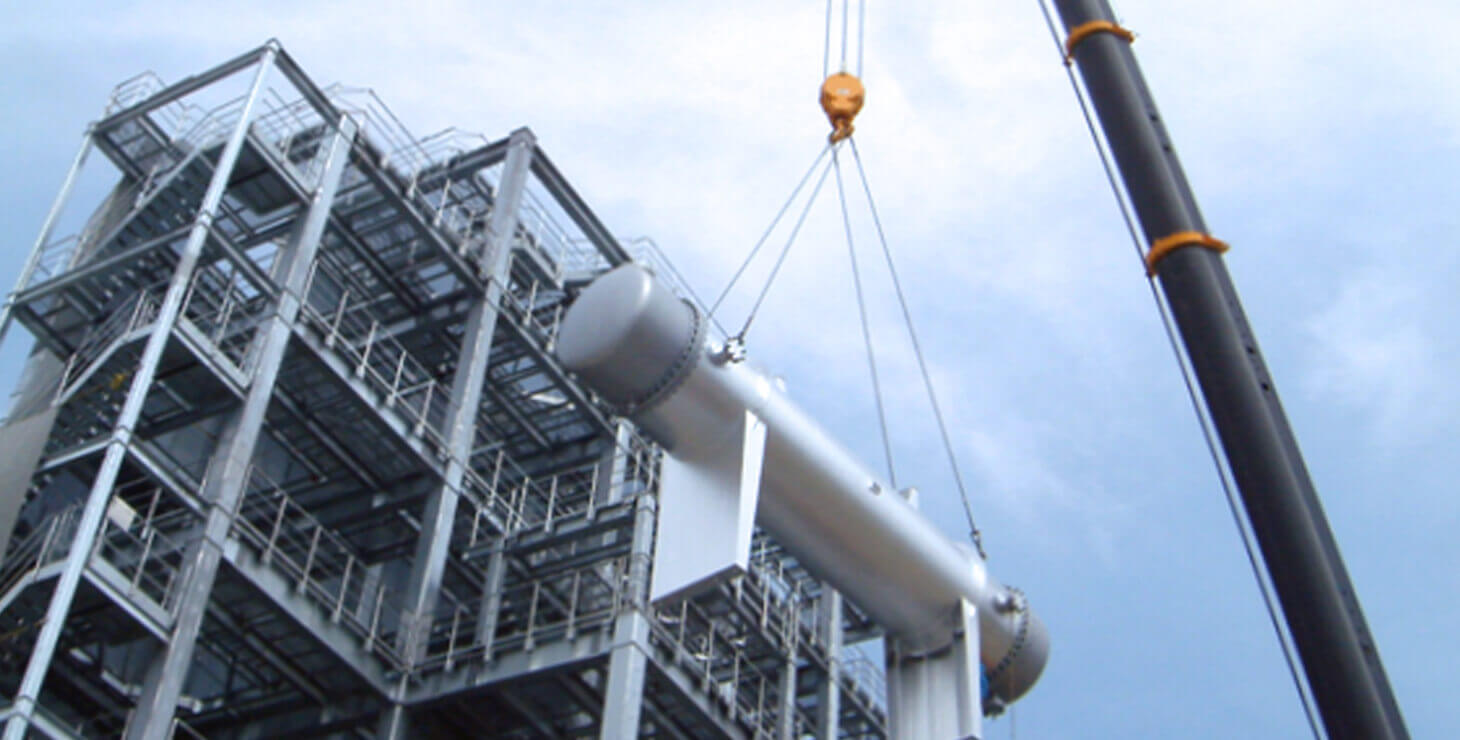
日本化学機械製造株式会社は、化学機器を自社工場にて製造できるプラントエンジニアリング企業です。
自社工場は、高圧ガス設備、圧力容器、また特殊材(耐食材料)の製作も可能で、材料手配から納入まで一括管理を行っています。プラントは様々な装置、機器類の組み合わせで構成されており、エンジニアリングには多くの知識と経験が必要とされます。
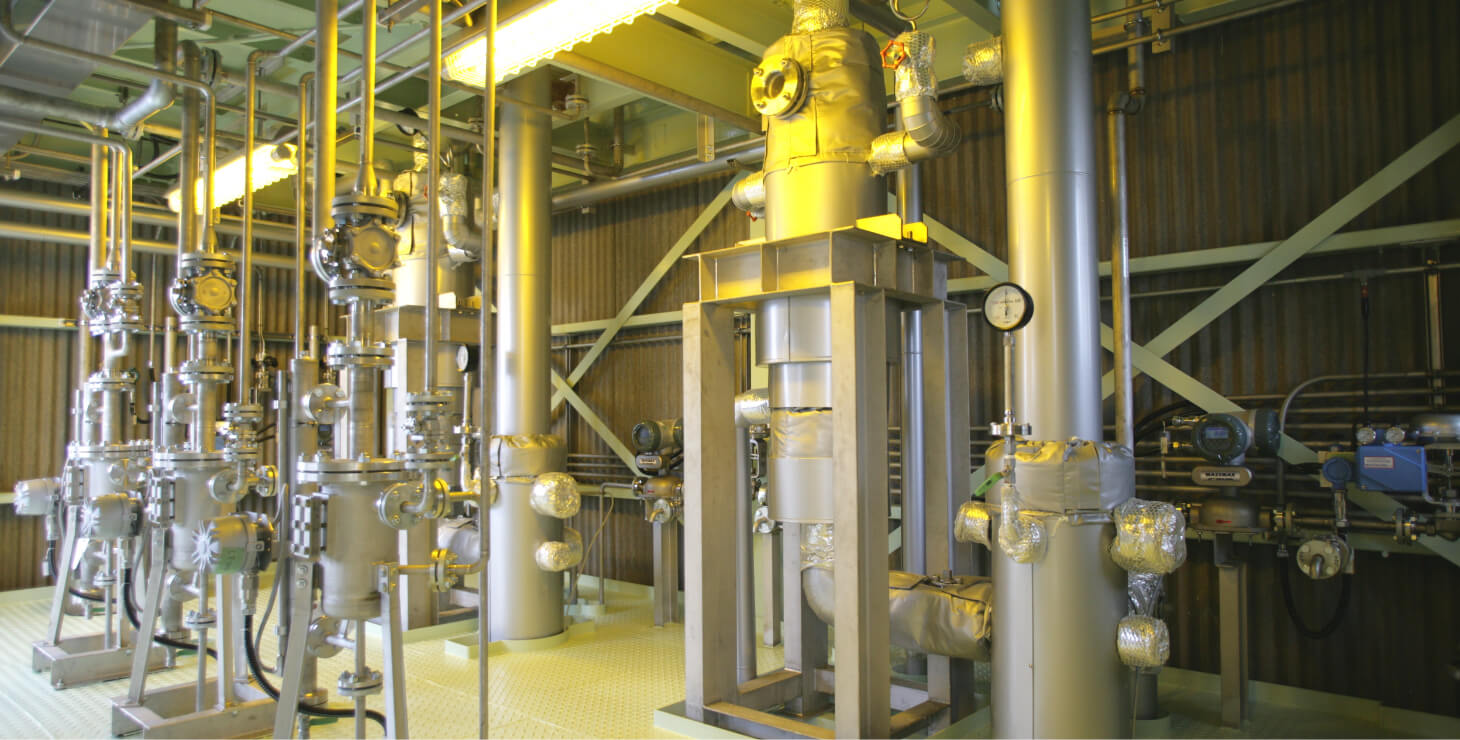
また、時代背景?外部環境の変化に伴いプラントに対するお客様のニーズも多種多様に変化しています。 設備の抱える様々な問題の解決、省エネルギー、環境対策、生産効率、品質向上、新製品生産のプロセス構築?設備計画の具現化によりお客様の事業価値向上の一助となるべく、最新の技術の開発、活用に努めております。 常にお客様の立場になり、安全で効率的な設備の構築を念頭に取り組んでおります。
-
THREE:The troops of Austria were already in Bavaria on the 21st of August. They amounted to eighty thousand men, under the nominal command of the Archduke Ferdinand¡ªa prince of high courage and great hopes¡ªbut really under that of General Mack, whose utter incapacity had not been sufficiently manifested to Austria by his miserable failures in the Neapolitan campaign, and who was still regarded in Germany as a great military genius. His army had been posted behind the Inn, in the country between the Tyrol and the Danube, into which the Inn falls at Passau. This was a strong frontier, and had the Austrians waited there till the arrival of the Russians, they might have made a powerful stand. But Mack had already advanced them to the Lech, where again he had a strong position covering Munich. Meanwhile, the Archduke Charles, Austria's best general, was posted in the north of Italy, with another eighty thousand men, and the Archduke John in the Tyrol with an inferior force. Such were the positions of the Austrian armies when Mack was invading Bavaria, and Buonaparte was preparing to crush him.
経験と実績をもとに、お客様のニーズに応じた最適な仕様?システムを構築、ご提案いたします。
-
THREE:[See larger version]
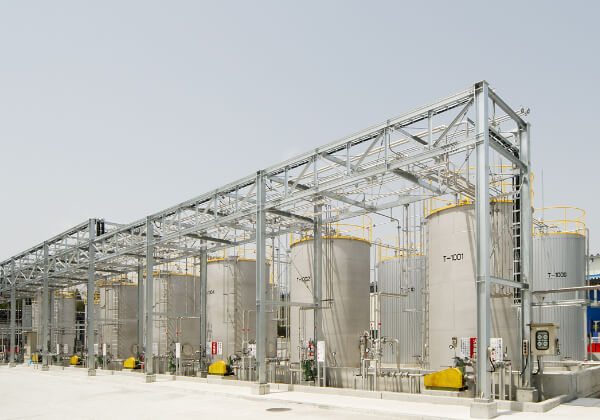
工場建屋、事務所棟、倉庫、試験棟などの建設も一括してご依頼いただけます。
-
THREE:WILLIAM PITT, EARL OF CHATHAM.
環境に配慮し、コストメリットを勘案した、省エネルギーで、省スペースな設備をご提案いたします。
-
THREE:When peace was made in Europe, the United States became anxious for peace too. Madison had begun the war in the ungenerous hope of wresting Canada from Great Britain, because he thought her too deeply engaged in the gigantic war against Napoleon to be able to defend that colony. He believed that it would fall an easy prey; that the Canadians must so greatly admire the model republic that they would abandon monarchy at the first call, and that he should thus have the glory of absorbing that great world of the north into the American Republic. In all this, he and those who thought with him found themselves egregiously deceived. The Canadians showed they were staunchly attached to Great Britain, and the attempts at invasion were beaten back by the native militia and by our handful of troops with the greatest ease. Meanwhile, the blockade of the east, and the seizure of the merchant shipping, drove the New England and other eastern States to desperation. Throughout this war Great Britain made a uniform declaration of a preference for peace, but her offers were regularly rejected so long as Napoleon was triumphant. The United States, professing the utmost love of freedom, were the blind and enthusiastic worshippers of the man who was trampling the liberties of all Europe under his feet. It was not till the last moment¡ªnot till he had been defeated in Russia, driven by Britain out of Spain, routed and pursued out of Germany, and compelled to renounce the Imperial Crown of France¡ªthat the American Government began to understand the formidable character of the Power which it had so long and so insolently provoked, and to fear the whole weight of its resentment directed against its shores. It is certain that, had Britain been animated by a spirit of vengeance, it had now the opportunity, by sending strong fleets and a powerful army to the coast of America, to ravage her seaboard towns, and so utterly annihilate her trade as to reduce her to the utmost misery, and to precipitate a most disastrous system of internal disintegration. The New England States, in 1814, not only threatened to secede, but stoutly declared that they would not furnish another shilling towards paying the expenses of the war. They even intimated an idea of making a separate peace with Britain. In Massachusetts especially these[114] menaces were vehement. Governor Strong spoke out plainly in the Legislative Chamber of that State. Madison endeavoured to mollify this spirit by abandoning his Embargo and Emancipation Acts, but this was now too late, for the strict blockade of the British, in 1814, rendered these Acts perfectly dead.In 1765 Clive embarked for India for the third and last time. He went out with the firm determination to curb and crush the monster abuses that everywhere prevailed in our Indian territories. He had made a fortune of forty thousand pounds a year, and he was, therefore, prepared to quash the system by which thousands of others were endeavouring to do the same. No man was sharper than Clive in perceiving, where his own interest was not concerned, the evils which were consuming the very vitals of our power, and making our name odious in Hindostan. The first and most glaring abuse of power which arrested his attention was as regarded his old puppet, Meer Jaffier. He had lately died, and his own court had proposed to set up his legitimate grandson; but the Council preferred his natural son, Nujeem-ul-Dowlah, a poor spiritless youth, who agreed that the English should take the military defence of the country, and also appoint a Prime Minister to manage the revenue and other matters of government. The Council agreed to this, and received a present from the nabob of their creation of one hundred and forty thousand pounds, which they divided amongst themselves. This was directly in opposition to the recent order of the Court of Directors, not to accept any presents from the native princes; but, as Clive states, he found them totally disregarding everything but their own avarice.
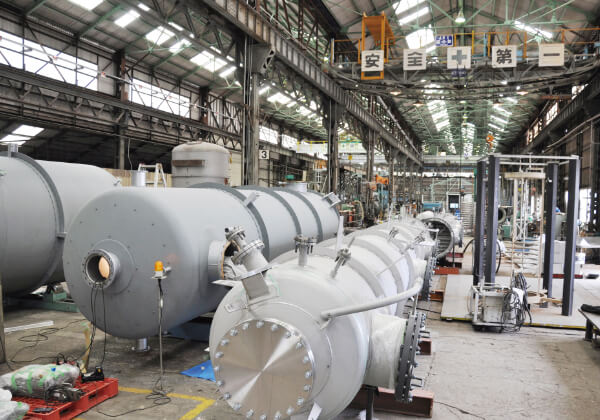
高圧ガス設備、圧力容器の製造資格を持った自社工場での製作により、品質、納期を管理しております。
-
THREE:The Free Trade journals did not fail to observe that what they called "this remarkable lecture on Free Trade, Protection, and smuggling, delivered from the Tory Treasury bench," was wound up by the avowal that the principles of Free Trade were now beyond a question, and that the rule to buy in the cheapest market and sell in the dearest was[490] the only valid theory of commerce. In the House some opposition was offered to the reduction of duties on pigs, apples, butter, fish, and other articles; but the Government proposals were affirmed by large majorities, except in the case of apples, which were made to pay 6d. in the bushel. The Opposition, however, raised the old question of the sugar duties, which had been omitted from the list of changes; but the Chancellor of the Exchequer declined to give way, and the Tariff Bill passed the Commons on the 28th of June. It was fiercely debated in the Upper House, but the Whigs did not carry any material amendments.
コストを積算し、見積価格をご提示します。回収期間法などの設備投資の経済性計算をお客様とご一緒にシミュレーションすることも可能です。
-
THREE:
化学工場への納入実績が多く、各種法規にも精通しています。官庁申請書類の作成もサポートいたします。
-
THREE:On the 9th of August, 1834, a fire broke out in part of the Dublin Custom House, one of the finest buildings in the United Kingdom. Owing to the immense quantity of combustible materials, the fierceness of the conflagration was something terrific. By great exertion the building was saved. This fire naturally produced a great sensation throughout the United Kingdom, but it was nothing in comparison to the interest excited by the burning of the two Houses of Parliament, which occurred on the 16th of October, 1834. According to the report of the Lords of the Privy Council, who inquired into the cause of the fire, the tally-room of the exchequer had been required for the temporary accommodation of the Court of Bankruptcy, and it was necessary to get rid of a quantity of the old exchequer tallies, which had accumulated till they would have made about two cartloads. These tallies had been used for kindling the fires. On one occasion a quantity of them was burned in Tothill Fields. There had been a question as to the best mode of getting rid of them, and it was ultimately resolved that they should be carefully and gradually consumed in the stoves of the House of Lords. But the work had been committed to workmen who were the reverse of careful. They heaped on the fuel, nearly filling the furnaces, and causing a blaze which overheated the flues. The housekeeper of the Lords' chamber sent to them several times during the day, complaining of the smoke and heat, but they assured her there was no danger. About four o'clock in the afternoon two strangers were admitted to see the House of Lords, and found the heat and smoke so stifling, that they were led to examine the floor, when they perceived that the floor-cloth was "sweating." At six o'clock the pent-up flames broke forth through the windows, and immediately the alarm was spread in all directions. The Ministers, the king's sons, Mr. Hume, and others, were presently on the spot, and did all they could in the consternation and confusion. The law courts were saved by having their roofs stripped off, and causing the engines to play on the interior. The greatest efforts were made to save Westminster Hall, which was happily preserved; but the two Houses of Parliament were[377] completely destroyed, together with the Commons' library, the Lords' painted chamber, many of the committee rooms, part of the Speaker's house, the rooms of the Lord Chancellor and other law officers, as well as the kitchen and eating-rooms. The king promptly offered Parliament the use of Buckingham Palace; but it was thought best to fit up temporary rooms on the old site, and to have them ready for next Session. The committee of the Privy Council sat for several days, and during the whole of that time the fire continued to smoulder among the d¨¦bris, and in the coal vaults, while the engines were heard to play from day to day within the boarded avenues. As soon as possible the temporary halls were prepared. The House of Lords was fitted up for the Commons, and the painted chamber for the Lords, at an expense of ¡ê30,000.It was on this occasion that the loyalty of the British settlers in Upper Canada shone forth with the most chivalrous devotion to the throne of the Queen. The moment the news arrived of Mackenzie's attack upon Toronto, the militia everywhere seized their arms, mustered in companies, and from Niagara, Gore, Lake Shireve, and many other places, set out on their march in the heavy snow in the depth of winter. So great was the excitement, so enthusiastic the loyalty, that in three days 10,000 armed volunteers had assembled at Toronto. There was, however, no further occasion for their services in that place, and even the scattered remnants of the insurrection would have been extinguished but for the interference of filibustering citizens of the United States, who were then called "sympathisers," and who had assembled in considerable numbers along the Niagara River. They had established their headquarters on Navy Island in the Niagara River, about two miles above the Falls, having taken possession of it on the 13th of December, and made it their chief dep?t of arms and provisions, the latter of which they brought from the American shore by means of a small steamer called the Caroline. Colonel M'Nab resolved to destroy the Caroline, and to root out the nest of pirates by whom she was employed. On the 28th of December a party of militia found her moored opposite Fort Schlosser, on the American side, strongly guarded by bodies of armed men, both on board and on shore. Lieutenant Drew commanded the British party, and after a fierce conflict the vessel was boarded and captured, a number of those who manned her being taken prisoners. These being removed, the British set the vessel on fire, and the flaming mass was swept down the rapids, and precipitated into the unfathomable abyss below. According to the American version of this affair, the British had made an unprovoked and most wanton attack upon an unarmed vessel belonging to a neighbouring State, on American territory, at a time of profound peace. The truth came out by degrees, and the American President, Van Buren, issued a proclamation on the 5th of January, 1838, warning all citizens of the United States that if they interfered in any unlawful manner with the affairs of the neighbouring British provinces, they would render themselves liable to arrest and punishment.
社内に様々なテスト装置をそろえておりますので、事前の検証も可能です。
新製品の生産プロセスの構築もご相談ください。
プラントの計画時から、設計、調達、建設、試運転、更には完成後のメンテナンスに至るまでトータルに対応いたします。当社は機器製作工場を所有しておりますので、細やかな機器設計?製作が可能です。
-
 FORE:The secession of the Duke of Savoy only the more roused the indignation of the Allies. The Dutch breathed a hotter spirit of war just as their power of carrying it on failed; and even the experienced Heinsius made an energetic oration in the States General, declaring that all the fruits of the war would be lost if they consented to the peace proposed. But to avoid it was no longer possible. The English plenipotentiaries pressed the Allies more and more zealously to come in, so much so that they were scarcely safe from the fury of the Dutch populace, who insulted the Earl of Strafford and the Marquis del Borgo, the Minister of the Duke of Savoy, when the news came that the duke had consented to the peace. Every endeavour was made to detach the different Allies one by one. Mr. Thomas Harley was sent to the Elector of Hanover to persuade him to co-operate with her Majesty; but, notwithstanding all risk of injuring his succession to the English Crown, he declined. Similar attempts were made[8] on the King of Prussia and other princes, and with similar results. The English Ministers now began to see the obstacles they had created to the conclusion of a general peace by their base desertion of the Allies. The French, rendered more than ever haughty in their demands by the successes of Villars, raised their terms as fast as any of the Allies appeared disposed to close with those already offered. The Dutch, convinced at length that England would make peace without them, and was bending every energy to draw away their confederates, in October expressed themselves ready to treat, and to yield all pretensions to Douay, Valenciennes, and Mauberg, on condition that Cond¨¦ and Tournay were included in their barrier; that the commercial tariffs with France should be restored to what they were in 1664; that Sicily should be yielded to Austria, and Strasburg to the Empire. But the French treated these concessions with contempt, and Bolingbroke was forced to admit to Prior that they treated like pedlars, or, what was worse, like attorneys. He conjured Prior "to hide the nakedness of his country" in his intercourse with the French Ministers, and to make the best of the blunders of his countrymen, admitting that they were not much better politicians than the French were poets. But the fault of Bolingbroke and his colleagues was not want of talent, it was want of honesty; and, by their selfish desire to damage their political rivals, they had brought their country into this deplorable dilemma of sacrificing all faith with their allies, of encouraging the unprincipled disposition of the French, who were certain to profit by the division of the Allies, and of abandoning the glory and position of England, or confessing that the Whigs, however much they had erred in entering on such enormous wars, had in truth brought them to the near prospect of a far more satisfactory conclusion than what they were taking up with.
工場建設、プラント新設の計画の立案には、大きな労力を要します。当社では、お客様の一助となるべく、官庁届け出の助成を行いながら、工場建設を進め、抱えておられる問題の解決に取り組んでおります。
-
 FORE:The result of the general election in the Upper Province was favourable to the Government; for of the 62 members returned, 44 were opposed to the organic changes demanded by the majority of the old Assembly. The result was that the Government and the legislature of this province were able to work together harmoniously and satisfactorily. This result, however, was said to be obtained by extraordinary, and not always legitimate influence, on the part of the Government,[400] and there was a large body of malcontents who joined the Lower Province in its rebellion, which occurred in 1837. The Governor of Upper Canada, who brought about this favourable change, was Sir Francis Head, who held the post of major in the army in 1835, when he was employed as Assistant Poor Law Commissioner in the county of Kent. Lord Glenelg, recognising in him a man of capacity and energy, fitted for a great emergency, suddenly appointed him Governor of Upper Canada. He rendered most important service afterwards in conducting the military operations by which the rebellion was put down. Lord Gosford was not so successful in the Lower Province. He was accused of having misled the people by holding out false hopes, and both he and the Colonial Secretary, under whose instructions he acted, were charged with something like treachery, by hinting at great concessions and keeping the word of promise to the ear, for the mere purpose of quieting the agitation and evading the reforms demanded. Lord Gosford, unable to stem the torrent of disaffection, dissolved the Assembly, and was recalled in order to make way for Sir J. Colborne. Both these Governors rendered the most important service in putting down the rebellion which soon afterwards broke out, and effecting the pacification and union of the provinces, which, as we shall hereafter see, were placed upon the solid basis of self-government and equal rights.The various triumphs in the direction of liberty of conscience evidence a sense of civil right in the community, which forced itself on the Government, rather than a sense of religion. But religion, too, was in steady growth. The Dissenters had greatly increased during this period, and amongst them the names of some of their ministers had acquired a general reputation. Robert Hall, of Leicester, and afterwards of Bristol, threw a new lustre on the Baptist community. He was the son of a Baptist minister, was at first educated by Dr. Ryland, the learned Baptist pastor of Northampton, and afterwards took his degree of M.A. at King's College, Aberdeen. He commenced his ministerial career in Bristol, and subsequently resided as minister at Leicester for twenty years. On the death of his old tutor, Dr. Ryland, he became the president of the Baptist Academy at Bristol, and pastor of Broadmead Chapel, in that town. Robert Hall was not inferior to any of the clergy of the Establishment in learning or eloquence. He was for eleven years the Baptist minister in Cambridge before removing to Leicester. In Cambridge he succeeded to a man nearly as remarkable, the celebrated Robert Robinson. At this university town he attracted the notice of some of the leading Established clergy and professors, and of the world at large, by his "Vindication of the Freedom of the Press," and his splendid sermon "On Modern Infidelity." Dr. Parr has left a testimony to the merits of Robert Hall in his will, which does honour to his liberality:¡ª"Mr. Hall has, like Jeremy Taylor, the eloquence of an orator, the fancy of a poet, the subtlety of a schoolman, the profoundness of a philosopher, and the piety of a saint." To the same body belonged the celebrated author of "Essays on the Formation of Character," John Foster, also of Bristol.
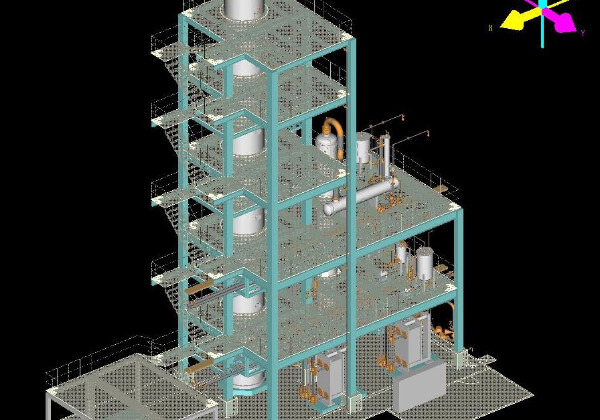
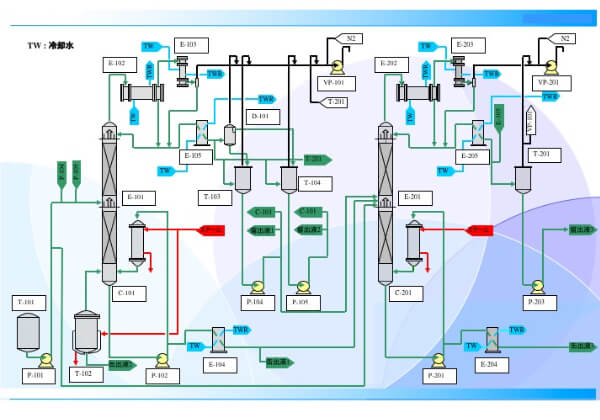
主要機器等の仕様を決定し、プラントの基本フローや配置を決定します。
-
 FORE:Within a few days after the first passing of this Act, that is, in the first week of March, a body of weavers¡ªsaid by the Government to amount to ten thousand men, but by a more competent authority, Samuel Bamford, the author of the "Life of a Radical," not to have exceeded four or five thousand¡ªmet in St. Peter's Field, at Manchester, and commenced a march southward. The intention was to proceed to London, to present to the Prince Regent, in person, a petition describing their distress. Bamford had been consulted, and had condemned the project as wild, and likely to bring down nothing but trouble on the petitioners. He believed that they were instigated by spies sent out by Government in order to find an opportunity of justifying their arbitrary measures. Suspicious persons had been trying him. But the poor, deluded people assembled, "many of them," says Bamford, "having blankets, rugs, or large coats rolled up, and tied knapsack-like on their backs. Some had papers, supposed to be petitions, rolled up, and some had stout walking-sticks." From their blankets, they afterwards acquired the name of Blanketeers. The magistrates appeared and read the Riot Act, and dispersed the multitude by soldiers and constables; but three or four hundred fled in the direction of their intended route, and continued their march, pursued by a body of yeomanry. By the time that they reached Macclesfield, at nine o'clock at night, they amounted to only one hundred and eighty; yet many of them persisted in proceeding, but they continually melted away, from hunger and from the misery of lying out in the fields on March nights. By the time that they reached Leek they were reduced to twenty, and six only were known to pass over the bridge at Ashbourne.Alberoni despatched Don Joseph Pati?o to Barcelona to hasten the military preparations. Twelve ships of war and eight thousand six hundred men were speedily assembled there, and an instant alarm was excited throughout Europe as to the destination of this not very formidable force. The Emperor, whose treacherous conduct justly rendered him suspicious, imagined the blow destined for his Italian territories; the English anticipated a fresh movement in favour of the Pretender; but Alberoni, an astute Italian, who was on the point of receiving the cardinal's hat from the Pope led Charles (VI.) to believe that the armament was directed against the Infidels in the Levant. The Pope, therefore, hastened the favour of the Roman purple, and then Alberoni no longer concealed the real destination of his troops. The Marquis de Lede was ordered to set out with the squadron for the Italian shores; but when Naples was trembling in apprehension of a visit, the fleet drew up, on the 20th of August, in the bay of Cagliari, the capital of the island of Sardinia. That a force which might have taken Naples should content itself with an attack on the barren, rocky, and swampy Sardinia, surprised many; but Alberoni knew very well that, though he could take, he had not yet an army sufficient to hold Naples, and he was satisfied to strike a blow which should alarm Europe, whilst it gratified the impatience of the Spanish monarch for revenge. There was, moreover, an ulterior object. It had lately been proposed by England and Holland to the Emperor, in order to induce him[40] to come into the Triple Alliance and convert it into a quadruple one, to obtain an exchange of this island for Sicily with the Duke of Savoy. It was, therefore, an object to prevent this arrangement by first seizing Sardinia. The Spanish general summoned the governor of Cagliari to surrender; but he stood out, and the Spaniards had to wait for the complete arrival of their ships before they could land and invest the place. The governor was ere long compelled to capitulate; but the Aragonese and the Catalans, who had followed the Austrians from the embittered contest in their own country, defended the island with furious tenacity, and it was not till November, and after severe losses through fighting and malaria, that the Spaniards made themselves masters of the island. The Powers of the Triple Alliance then intervened with the proposal that Austria should renounce all claim on the Spanish monarchy, and Spain all claim on Italy. Enraged at this proposal, Alberoni embarked on extensive military preparations, and put in practice the most extensive diplomatic schemes to paralyse his enemies abroad. He won the goodwill of Victor Amadeus by holding out the promise of the Milanese in exchange for Sicily; he encouraged the Turks to continue the war against the Emperor, and entered into negotiations with Ragotsky to renew the insurrection in Hungary; he adopted the views of Gortz for uniting the Czar and Charles of Sweden in peace, so that he might be able to turn their united power against the Emperor, and still more against the Electorate of Hanover, thus diverting the attention and the energies of George of England. Still further to occupy England, which he dreaded more than all the rest, he opened a direct correspondence with the Pretender, who was now driven across the Alps by the Triple Alliance, and promised him aid in a new expedition against Britain under the direction of the Duke of Ormonde, or of James himself. In France the same skilful pressure was directed against all the tender places of the body politic. He endeavoured to rouse anew the insurrection of the Cevennes and the discontents of Brittany. The Jesuits, the Protestants, the Duke and Duchess of Maine, were all called into action, and the demands for the assembling of the States-General, for the instant reformation of abuses, for reduction of the national debts, and for other reforms, were the cries by which the Government was attempted to be embarrassed.
設備の構成要素の詳細な仕様や配置を決定し、図面を作成します。
-
 FORE:LA ROCHE-JAQUELEIN AND THE REPUBLICAN SOLDIERS. (See p. 444.)Some of the writers of the last period were still existing in this. Dryden was living, and wrote some of his most perfect works, as his "Fables," and his "Alexander's Feast," as well as translated Virgil after the Revolution. He was still hampered by his miserable but far more successful dramatic rivals, Shadwell and Elkanah Settle. Nathaniel Lee produced in William's time his tragedies, "The Princess of Cleves," and his "Massacre of Paris." Etherege was yet alive; Wycherley still poured out his licentious poems; and Southern wrote the greater part of his plays. His "Oronooko" and his "Fatal Marriage" were produced now, and he received such prices as astonished Dryden. Whilst "Glorious John" never obtained more than a hundred pounds for a play, Southern obtained his six or seven hundred.
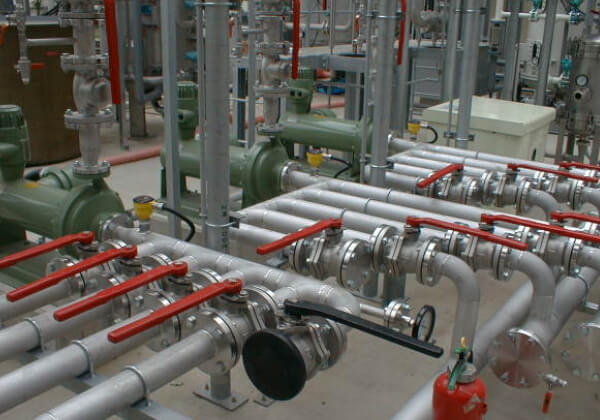
詳細設計に基づきポンプや部品類の購入品の調達先を選定し、発注します。
プラントを構成する主要な機器は特注製作が多く、材料発注、製作、各種検査、運搬まで工程、納期を管理します。 -
 FORE:TRIAL OF LOUIS XVI. (See p. 409.)The spirits of the Americans had been raised by the success of attempts against the forts of Ticonderoga and Crown Point, on Lake Champlain. Early in the spring, some of the leading men of Connecticut, and chief amongst them Wooster and Silas Deane, projected this expedition, as securing the passes into Canada. The volunteers who offered for this enterprise were to march across the frontiers of New York, and come suddenly on these forts. The wretched condition of carelessness existing in these important outposts, notwithstanding the alarming state of the colonies, may be known by the result. Phelps, disguised as a countryman, entered the fort on pretence of seeking a barber; and, whilst roaming about in feigned search of him, noted well the ruinous condition of the fort, and the utter negligence of the guard. The next day, Ethan Allen went alone to the fortress, ostensibly on a visit to his friend the commander, leaving his troops concealed in the wood. He represented that he wanted to conduct some goods across the lake, and borrowed twenty of his soldiers to help him. These men he made dead-drunk; and then, rushing suddenly to the fort, where there were only twenty-two soldiers more, he compelled them in their surprise to lay down their arms, set a guard over them, and entered his friend's bed-room and pronounced him a prisoner. He then advanced against the fort of Crown Point, where he found only a garrison of twelve men, and immediately afterwards secured Skenesborough, the fortified house of Major Skene, and took his son and his negroes.
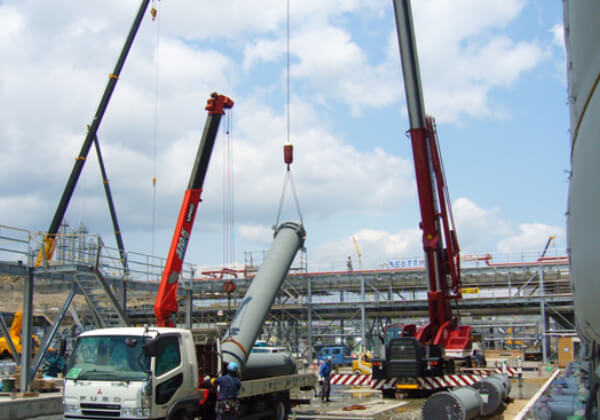
安全を第一に、管理技術者が責任を持って施工、工程、品質の管理を行いながら協力会社と連携し進めていきます。
土木?建築、機器据付、配管、電気?計装、断熱などの工事があります。 -
 FORE:[See larger version]
プラント完成後、性能が出るか試運転を行って確認、調整を行います。
きめ細やかな運転指導により実運転へのスムースな移行を促します。完成図書と共にお引渡しとなります。
運転?保守フェーズ
-
 FORE:THE MUTINY AT SPITHEAD: HAULING DOWN THE RED FLAG ON THE "ROYAL GEORGE." (See p. 456.)The distinguished poets still thronging the close of this period would require voluminous space to particularise their works: the vigorous and classic Savage Landor; the graceful, genial Leigh Hunt; Charles Lamb, quaint and piquant; Rogers, lover equally of art and nature; John Wilson, tender, but somewhat diffuse; Hogg, the Ettrick Shepherd, linked in perpetual memory with his "Kilmeny" and the "Bird of the Wilderness;" Allan Cunningham; MacNeill; Grahame, author of "The Sabbath;" James Montgomery, amongst the very few successful poets of religion; Tennant, author of "Anster Fair;" Kirke White, Sotheby, Maturin, Procter (Barry Cornwall), Milman, Joanna Baillie, Miss Mitford, Mrs. Hemans, Mrs. Howitt, Richard Howitt, Elliott the Corn-Law Rhymer, whose most beautiful poems had been for twenty years steadily ignored by the whole English press, till they were accidentally discovered by Sir John Bowring.
プラント、機器の安全と安定稼働のために、定期的なメンテナンスをお薦めいたします。
-
 FORE:While the Scottish Bill was passing through committee in the Commons the English Bill was being hotly contested in the Lords, and absorbed so much attention that only a few members comparatively voted in the divisions upon the former measure; seldom more than one hundred, often less. There had previously been no property qualification in Scotland for members of Parliament representing towns. A provision had been inserted in the Bill requiring heritable property to the extent of ¡ê600 a year for a county and ¡ê300 a year for a borough; but this was expunged on the third reading, on the ground that if the property qualification were rigidly enforced it would exclude some of the brightest ornaments of the House: for example, in past times, it would have excluded Pitt, Sheridan, Burke, and Tierney. The Scottish Bill was passed by the Lords on the 13th of July. It increased the number of members for that country from forty-five to fifty-three, giving two each to Edinburgh and Glasgow, and one each to Paisley, Aberdeen, Perth, and Dundee.As to the other changes in the Ministry, Sir Dudley Ryder being advanced to the bench, Murray succeeded him as Attorney-General. Lord Chancellor Hardwicke was made an earl; Sir George Lyttelton and George Grenville, friends of Pitt, had places¡ªone as Treasurer of the Navy, the other as cofferer. Pitt himself, who was suffering from his great enemy, the gout, at Bath, was passed over. No sooner did he meet with Fox in the House of Commons, than he said aloud, "Sir Thomas Robinson lead us! Newcastle might as well send his jack-boot to lead us!" No sooner did the unfortunate Sir Thomas open his mouth, than Pitt fell with crushing sarcasm upon him; and Fox completed his confusion by pretending to excuse him on account of his twenty years' absence abroad, and his consequent utter ignorance of all matters before the House. Soon after, Pitt made a most overwhelming speech, on the occasion of a petition against the return of a Government candidate by bribery, and called on Whigs of all sections to come forward and defend the liberties of the country, unless, he said, "you will degenerate into a little assembly, serving no other purpose than to register the arbitrary edicts of one too powerful subject!" This was a blow at Newcastle, which, coming from a colleague in office, made both him and his puppets in the Commons, Legge and Robinson, tremble. Newcastle saw clearly that he must soon dismount Robinson from his dangerous altitude, and give the place to Fox.
生産量を減らすことなく、生産能力を増強するなど、お客様のご要望にお応えできるソリューションをご提案いたします。
お客様のプロセスノウハウと当社の固有技術の融合によって最適化、効率化、さらには環境に優しい設備を実現をいたします。海外現地法人(タイ、ベトナム)におきましても同等のエンジニアリングが提供できるように、本社の技術者と連携し管理いたしております。

※これ以外にも様々な単位操作装置、単体機器製作ができます。
| 業種?分野 | プラント?設備名称 | 構成プロセス | 付帯設備?工事施工 |
|---|---|---|---|
| ファインケミカル | IT関連化学品プラント | 反応プロセス ろ過分離プロセス 乾燥プロセス |
クリーンルーム、充填、タンクヤード、 ユーティリティ、消火?防火設備、 土木?建築、計器?計装工事、 電気工事 |
| 食品工業 | 澱粉工場 | 反応プロセス 分離プロセス 精製プロセス 脱水?乾燥プロセス |
タンクヤード、ユーティリティ、 消火?防火設備、土木?建築、 計器?計装工事、電気工事、 原料受入?貯蔵設備、計量?包装設備 |
| 化学工業 | 合成樹脂工場 > | 反応プロセス 蒸留プロセス 濾過分離プロセス 乾燥プロセス |
タンクヤード、ユーティリティ、 供給設備、充填、自動倉庫、 焼却設備、出荷設備 |
| 食品工業 | 糖化工場 > (異性化糖類製造設備) |
液化?糖化プロセス 濃縮プロセス 濾過?精製プロセス |
タンクヤード、ユーティリティ、 土木?建築、計器?計装工事、 電気工事 |
| 環境?リサイクル | 溶剤回収プラント | 濃縮?調整プロセス 蒸留プロセス |
タンクヤード、計量設備、 ユーティリティ、消火?防火設備、 計器?計装工事、電気工事、 原料受入?貯蔵?出荷設備 |
| 無機化学工業 | 触媒製造プラント (自動車用) |
調合プロセス コーティングプロセス 焼成プロセス |
ロボット搬送システム、 原料調整?供給装置 |
| 無機化学工業 | 二次電池用原料 精製プラント |
調整プロセス 反応プロセス 分離?濃縮プロセス 蒸留プロセス |
タンクヤード、ユーティリティ、 土木?建築、空調設備、集塵?局所排気、 計器?計装工事、 電気工事、貯蔵設備、計量?包装設備 |
| 新エネルギー | バイオエタノール 大型実証モデルプラント > |
蒸留プロセス 脱水プロセス |
計器?計装工事、電気工事 |
| 無機化学工業 | 水素回収設備 | 水素回収プロセス | タンクヤード、冷却システム、 計器?計装工事 |